Cashless payments have become the norm in many environments, including retail stores, stadiums, transportation hubs, and entertainment venues. But even as digital payments grow, cash has not disappeared. Many customers still rely on it, whether by preference or necessity, and businesses face a choice: exclude cash users or find a way to accommodate them.
This is where reverse ATMs come in.
Also known as cash-to-card kiosks, reverse ATMs help businesses operate in increasingly cashless environments without excluding customers who arrive with cash. These self-service kiosks convert cash into a prepaid debit card that can be used immediately, creating a practical bridge between physical currency and modern payment systems.
What Is a Reverse ATM?
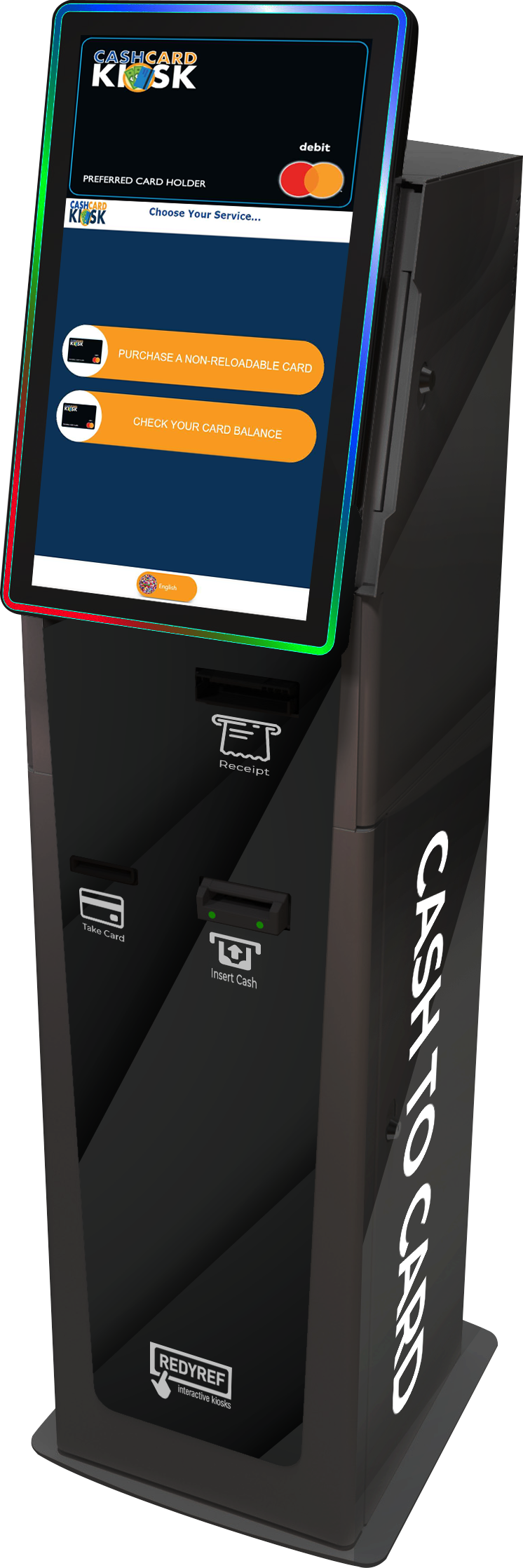 A reverse ATM is essentially the opposite of a traditional ATM. Instead of dispensing cash, it accepts cash from a customer and loads that value onto a prepaid card.
The process is simple:
- A customer inserts cash into the kiosk.
- The kiosk issues a prepaid card loaded with the same amount.
- The customer can then use that card to make purchases.
Depending on the program structure, the card may be usable only within a specific business or venue, or it may function as an open-loop prepaid card accepted anywhere that card network is accepted.
Reverse ATMs are especially useful for businesses that want to reduce or eliminate cash handling while still accommodating cash-paying customers, including unbanked and underbanked populations. For organizations focused on accessibility and financial inclusion, that flexibility matters.
Why Reverse ATMs Are Becoming More Common
As more businesses shift toward cashless operations, reverse ATMs have become an increasingly important part of the payment ecosystem. They allow organizations to modernize transactions without creating friction for customers who still use cash.
According to the FDIC’s 2023 National Survey of Unbanked and Underbanked Households, 4.2% of U.S. households were unbanked and 14.2% were underbanked. That means millions of households still rely, at least in part, on cash or nontraditional financial services, making reverse ATMs a practical way for businesses to support cash users in cashless environments.
Several factors are driving that growth.
Support for Cashless Operations: Businesses can move toward cashless payments while still providing an option for customers who do not use credit cards, debit cards, or mobile wallets.
Faster Transactions: Once cash is converted to a card, purchases often move more quickly at concession stands, merchandise counters, food-service areas, and other checkout points.
Reduced Cash Handling: Less cash on-site means fewer cash drawers, fewer manual deposits, less reconciliation, and less time spent managing physical currency.
Improved Security: Reducing the amount of cash circulating through a business can help minimize risks associated with theft, shrinkage, and cash-handling errors.
Better Customer Experience: Cash-to-card kiosks support a faster, more consistent payment experience in environments where speed and throughput matter.
How Reverse ATMs Benefit Businesses
For businesses, the value of a reverse ATM goes beyond payment convenience. These kiosks can support broader operational, customer experience, and revenue goals.
Better Customer Access: A business does not have to choose between going cashless and serving cash customers. Reverse ATMs make it possible to do both.
Greater Operational Efficiency: When fewer transactions are handled in cash, staff can spend less time counting drawers, reconciling registers, and preparing deposits.
Stronger Revenue Opportunities: In high-traffic environments, customers who convert cash to card can often move more easily between points of sale, including concessions, food and beverage, merchandise, parking, and other on-site purchases.
Improved Venue Experience: In locations where long lines affect customer satisfaction, faster payment workflows can support a smoother overall experience. The operational and customer experience benefits compound in venues where throughput directly affects revenue.
Common Reverse ATM Use Cases
Reverse ATMs are flexible and can be deployed across a wide range of industries and environments.
Sports Arenas and Stadiums: Large venues often use reverse ATMs to support cashless concessions, parking, and merchandise sales while still accommodating fans who arrive with cash. The combination of high transaction volumes and limited service windows makes cash-to-card kiosks particularly valuable in sports and entertainment venues, where speed directly impacts customer satisfaction.
Concert Venues and Entertainment Spaces: Cash-to-card kiosks help entertainment venues speed up transactions and reduce cash handling during busy events.
Retail Stores: Retailers moving toward cashless checkout can use reverse ATMs to serve customers who still prefer cash without slowing down operations.
Festivals, Fairs, and Amusement Parks: In fast-moving environments where convenience matters, reverse ATMs help simplify payments and improve transaction speed.
Airports and Transportation Hubs: Travelers can use prepaid cards issued from a reverse ATM for food, retail purchases, tickets, and other on-site expenses.
Restaurants and Food Service Environments: Restaurants and other food-service operators can reduce cash-handling complexity while offering guests a straightforward way to pay.
What to Look for in a Reverse ATM
Not all reverse ATMs are built the same. If your business is evaluating a cash-to-card solution, a few features matter more than others.
User-Friendly Interface: The experience should be intuitive, fast, and easy to understand, especially in high-traffic public settings.
Reliable Transaction Speed: Quick cash acceptance and card issuance are critical to keeping lines short and customers moving.
Durable Hardware: Kiosks deployed in demanding environments need to be built for frequent use and long-term reliability.
Secure Payment Technology: The system should support industry-standard payment security and integrate cleanly into the broader payment ecosystem.
Flexible Program Options: Businesses may need closed-loop or open-loop card functionality depending on how and where the card will be used. Organizations early in the evaluation process often benefit from reviewing common implementation questions in a cash-to-card kiosk FAQ before requesting proposals.
Why Businesses Are Making the Shift
Going cashless is not just about following payment trends. For many organizations, it is about improving speed, reducing operational complexity, and creating a more consistent customer experience.
Reverse ATMs make that transition easier. They help businesses reduce the burden of cash handling while still providing an inclusive payment option for customers who need it.
For high-traffic environments in particular, that combination can make a meaningful difference.
Frequently Asked Questions About Reverse ATMs
What does a reverse ATM do?
A reverse ATM accepts cash and converts it into a prepaid card that can be used for purchases.
Is a reverse ATM the same as a cash-to-card kiosk?
Yes. The terms are often used interchangeably to describe kiosks that convert cash into prepaid card value.
Where are reverse ATMs commonly used?
They are commonly used in stadiums, arenas, retail stores, entertainment venues, airports, and other high-traffic cashless environments.
Why do businesses use reverse ATMs?
Businesses use them to support cashless operations, reduce cash handling, improve transaction speed, and still accommodate customers who pay with cash.
Can reverse ATM cards be used outside the venue?
It depends on the program. Closed-loop cards work only within a specific business or venue, while open-loop cards can be used anywhere the card network, such as Visa or Mastercard, is accepted.
Looking for a Reverse ATM Solution?
At REDYREF, we design and manufacture cash-to-card kiosks that help businesses transition to cashless environments without leaving cash users behind. From sports and entertainment venues to retail and transportation settings, our reverse ATM solutions are built to support efficient transactions, reduce cash-handling challenges, and improve the overall customer experience.
Contact us to learn more about REDYREF’s reverse ATM and cash-to-card kiosk solutions.