The last U.S. penny rolled off the production line in November 2025, marking the end of a 233-year era. While 240 billion pennies remain in circulation, businesses across the country are already experiencing shortages—and scrambling to adapt. The reason for the phase-out is straightforward economics: producing a penny costs 3.69 cents, more than three times its face value. After years of mounting losses, the Treasury Department suspended production under its authority in 31 U.S.C. § 5111(a) and § 5112, ending the manufacture of a coin that has been costing taxpayers money with every mint.
But the impact isn't just historical—it's operational. And it's happening right now.
The Immediate Business Response
Major retailers moved quickly to address the change-making crisis. McDonald's began rounding cash transactions to the nearest 5 cents at locations nationwide. QuikTrip, Love's, and Kwik Trip convenience stores implemented similar policies.
The rounding only affects cash payments—credit and debit card transactions remain exact to the cent. But for businesses that still serve cash customers, the inability to make exact change creates a real operational problem. The Retail Industry Leaders Association recently reported that thousands of retail locations across the country are experiencing shortages and that businesses are seeking congressional action to address the currency gap.
Rounding to the nearest nickel works for some businesses. But it's a stopgap solution that doesn't address the underlying challenge: how to serve customers who prefer or need to use cash in an environment where exact change is becoming impossible.
Beyond Retail: Who Else Is Affected?
The penny shortage isn't just a retail problem. Any business environment that handles high volumes of small cash transactions faces the same operational challenge:
Entertainment Venues: Sports stadiums, concert halls, and festival grounds processing thousands of small-value transactions per event.
Healthcare Facilities: Hospital cafeterias, gift shops, and vending operations serving patients, visitors, and staff who may rely on cash.
Hospitality & Food Service: Hotels, food courts, cafeterias, and quick-service restaurants dependent on fast, accurate transactions.
College Campuses: Dining halls, bookstores, and vending machines serving students with varying access to banking.
The common thread: cash remains significant, transaction values are often under $20, and operational efficiency matters.
The Operational Challenge
Rounding transactions might seem simple, but it creates several business complications:
Customer Experience Issues: Rounding causes friction and slows transactions.
Accounting Complexity: Discrepancies accumulate across thousands of transactions.
Competitive Disadvantage: Businesses that can't accept cash seamlessly lose customers.
Labor Impact: Staff time is diverted to explanations and reconciliation.
For high-volume businesses, these are bottom-line issues.
The Cash-to-Card Reverse ATM Solution
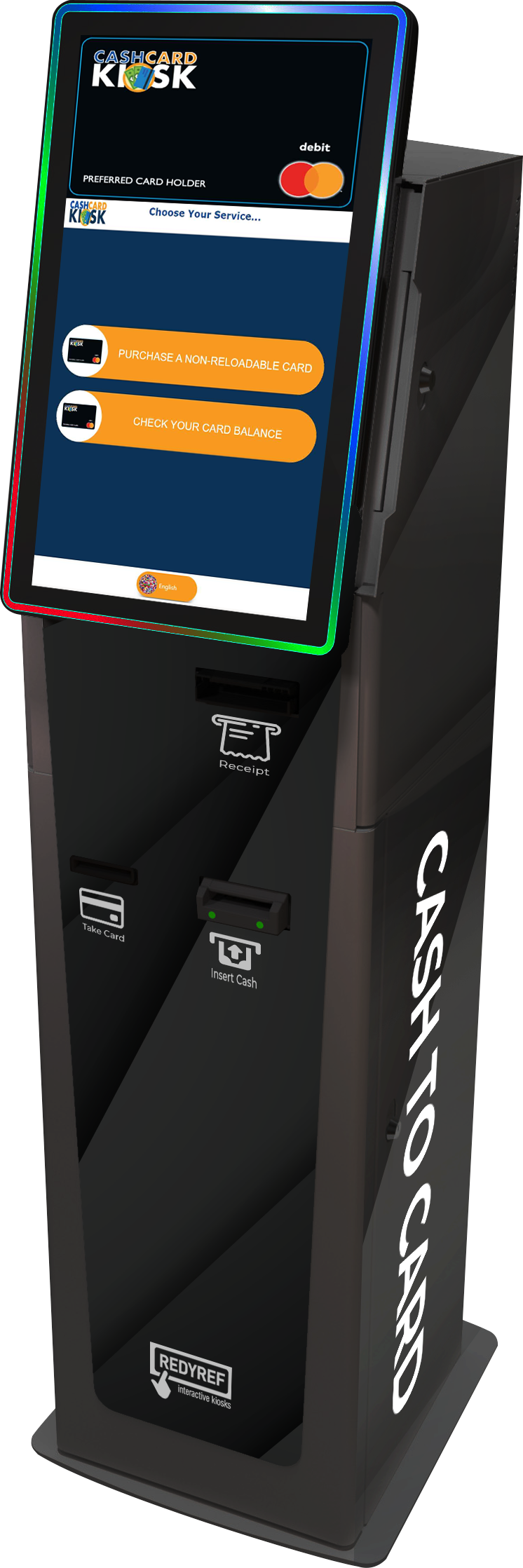
This is where reverse ATMs—also known as cash-to-card kiosks—become strategically valuable.
A customer inserts cash, which is converted into a prepaid debit card loaded with the exact amount. The card can be used immediately anywhere cards are accepted.
For businesses, the benefits are significant:
- No change-making required: Operate card-only while still serving cash users
- Faster transactions: Increased throughput
- Reduced cash handling: Lower theft risk and labor costs
- Better data: Card transactions provide actionable insights
For customers:
- Cash users are not excluded
- Conversion takes seconds
- Cards work immediately or later
- No need for exact change
Cash-to-card kiosks bridge the gap between cash and digital payments.
Real-World Implementation
Sports & Entertainment: Stadiums convert cash once, then operate card-only throughout.
Healthcare: Hospitals maintain accessibility without operational friction.
Retail & Hospitality: Hotels and food courts eliminate change-making headaches.
Campus Dining: Universities integrate kiosks into student payment ecosystems.
The Accelerating Trend
As pennies disappear from circulation, the change-making challenge will intensify.
Businesses face three options:
- Round transactions and accept friction
- Go fully cashless and exclude customers
- Install cash-to-card kiosks and bridge both worlds
For customer-facing businesses, option three is increasingly the strategic choice.
Looking Forward
The penny phase-out was announced well in advance. Businesses that planned ahead are now operating smoothly while others scramble.
The lesson extends beyond pennies: anticipate operational change early and implement solutions proactively.
Cash-to-card kiosks are not just a response to the penny shortage—they are a long-term solution supporting customer choice in a digital payments world.
Frequently Asked Questions
Can businesses still accept cash after the penny phase-out?
Yes. Options include rounding, going cashless, or using cash-to-card kiosks.
How long does conversion take?
Typically 30–60 seconds.
What happens to pennies still in circulation?
They will gradually disappear through normal attrition.
Do cash-to-card kiosks work with any payment system?
They issue standard prepaid debit cards accepted wherever major card networks are used.