THE BLOG

The $0.01 Problem: How the Penny Phase-Out Is Driving Cash-to-Card Adoption Across Industries

The last U.S. penny rolled off the production line in November 2025, marking the end of a 233-year era. While 240 billion pennies remain in circulation, businesses across the country are already experiencing shortages—and scrambling to adapt. The reason for the phase-out is straightforward economics: producing a penny costs 3.69 cents, more than three times its face value. After years of mounting losses, the Treasury Department suspended production under its authority in 31 U.S.C. § 5111(a) and § 5112, ending the manufacture of a coin that has been costing taxpayers money with every mint.

But the impact isn't just historical—it's operational. And it's happening right now.

The Immediate Business Response

Major retailers moved quickly to address the change-making crisis. McDonald's began rounding cash transactions to the nearest 5 cents at locations nationwide. QuikTrip, Love's, and Kwik Trip convenience stores implemented similar policies.

The rounding only affects cash payments—credit and debit card transactions remain exact to the cent. But for businesses that still serve cash customers (and despite the rise of digital payments, many do), the inability to make exact change creates a real operational problem. The Retail Industry Leaders Association recently reported that "thousands of retail locations across the country are experiencing shortages" and that businesses are seeking congressional action to address the currency gap.

Rounding to the nearest nickel works for some businesses. But it's a stopgap solution that doesn't address the underlying challenge: how to serve customers who prefer or need to use cash in an environment where exact change is becoming impossible.

Beyond Retail: Who Else Is Affected?

The penny shortage isn't just a retail problem. Any business environment that handles high volumes of small cash transactions faces the same operational challenge:

Entertainment Venues: Sports stadiums, concert halls, and festival grounds where concession stands process thousands of small-value transactions per event. When you're selling $8 sodas and $6 hot dogs to crowds of 50,000+ people, the inability to make exact change compounds quickly.

Healthcare Facilities: Hospital cafeterias, gift shops, and vending operations serve diverse populations including emergency visitors, elderly patients, and family members who may be relying on cash during stressful situations. These environments can't simply turn away cash customers.

Hospitality & Food Service: Hotel gift shops, quick-service restaurants, food courts, and cafeteria-style dining operations all depend on efficient small-transaction processing. Change-making delays directly impact customer experience and throughput.

College Campuses: Campus dining halls, bookstores, and vending machines serve student populations with varying levels of banking access and payment preferences.

The common thread: these are all environments where cash transactions remain significant, transaction values are often under $20, and operational efficiency matters.

The Operational Challenge

Rounding transactions might seem simple, but it creates several business complications:

Customer Experience Issues: Not every customer understands or accepts rounding. "Why am I paying $8.05 when the register says $8.03?" becomes a point-of-sale friction that slows transactions and frustrates customers.

Accounting Complexity: Rounding creates discrepancies between register totals and actual revenue. Over thousands of transactions, these add up and complicate financial reconciliation.

Competitive Disadvantage: Businesses that can't make exact change may lose cash-preferring customers to competitors who can still accept cash seamlessly.

Labor Impact: Staff spend time explaining rounding policies, handling customer complaints, and managing the accounting complications—time that could be spent serving customers.

For businesses with thin margins and high transaction volumes, these aren't minor inconveniences. They're operational challenges that impact the bottom line.

The Cash-to-Card Reverse ATM Solution
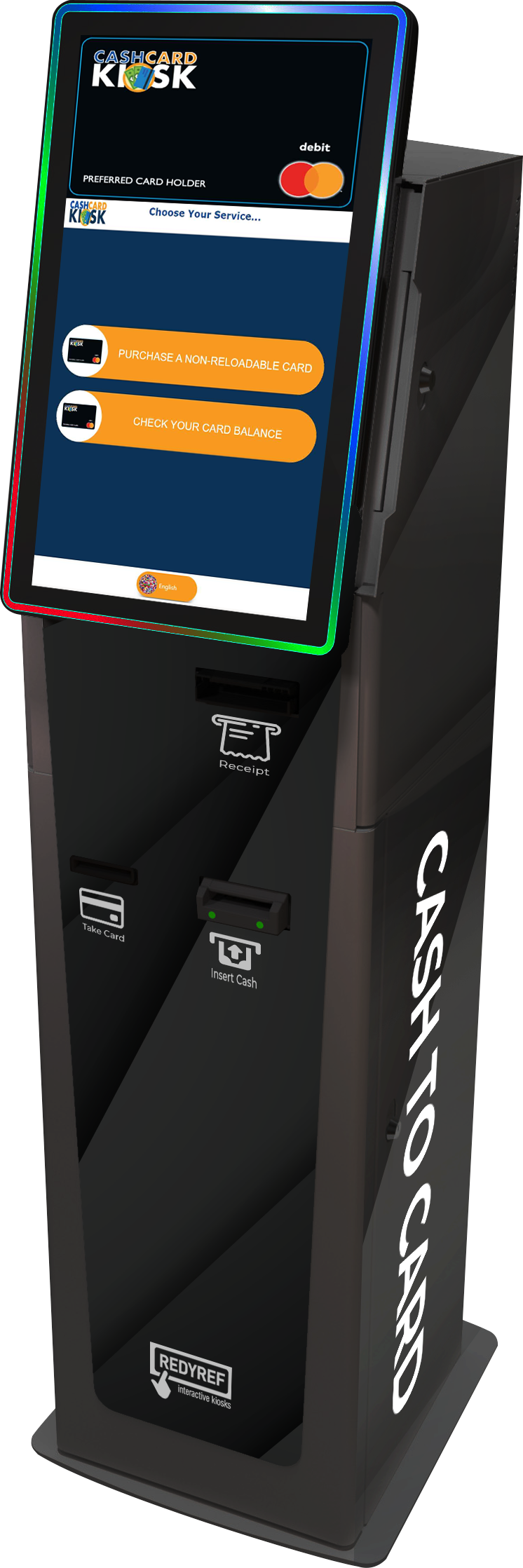
reverse atm cash to card kiosk solutionThis is where reverse ATMs—also called cash-to-card kiosks—become strategically valuable.

Here's how they work: A customer inserts cash (bills of any denomination) into the kiosk, which converts it to a prepaid debit card loaded with the exact amount. The card can be used immediately for purchases anywhere cards are accepted, including the facility where the kiosk is located.

For businesses, the benefits are significant:

  • No change-making required: The business can operate entirely on card transactions while still serving cash customers
  • Faster transactions: Card payments process more quickly than cash, improving throughput at high-volume locations
  • Reduced cash handling: Less cash in registers means reduced theft risk, eliminated counting time, and lower banking fees
  • Better data: Card transactions provide customer spending data that cash transactions don't

Beyond these operational advantages, cash-to-card kiosks deliver measurable ROI improvements through labor savings, increased transaction speeds, and enhanced security.

For customers, the experience is seamless:

  • Cash-preferring customers aren't excluded
  • The conversion process takes seconds
  • The prepaid card can be used immediately or saved for future visits
  • No need to worry about exact change or getting bills broken

Essentially, cash-to-card kiosks solve the operational challenge while preserving customer choice. They're the bridge technology that allows businesses to go effectively cashless without excluding the significant portion of customers who still use cash.

Real-World Implementation

The use cases are diverse and proven:

Sports & Entertainment: Venues can convert all concession stands and merchandise locations to card-only, then place cash-to-card kiosks at strategic entry points. Fans convert their cash once and use the card throughout the venue. Major stadiums and arenas have already implemented this model, resulting in faster service, shorter lines, and better customer experience.

Healthcare Facilities: Hospitals can place kiosks near cafeterias, gift shops, and vending areas. Patients, visitors, and staff can convert cash as needed and use cards for all purchases throughout the facility. Result: operational efficiency without excluding cash users.

Retail & Hospitality: Hotels, shopping centers, and food courts can offer cash-to-card conversion as an amenity. Customers get the convenience of cards while businesses eliminate change-making headaches. Result: improved customer service and reduced cash handling costs.

Campus Dining: Universities can integrate cash-to-card kiosks with existing student ID card systems, allowing students to convert cash to campus card value. Result: unified payment system with cash accessibility.

The applications extend across retail environments, entertainment venues, healthcare facilities, hospitality, and more—anywhere high-volume cash transactions meet the need for operational efficiency.

The Accelerating Trend

The penny shortage is just the beginning. As the 240 billion pennies currently in circulation gradually disappear from the money supply—lost in couch cushions, jars, and landfills—the change-making challenge will intensify.

But the penny phase-out is also accelerating a transition that was already underway. The majority of McDonald's transactions are already cashless anyway. The trend toward digital payments has been building for years. The penny shortage is simply the forcing function that's making businesses confront the operational reality sooner rather than later.

Businesses have essentially three options:

  1. Round transactions and accept the complications (what most retailers are doing now)
  2. Go entirely cashless and exclude cash customers (operationally simple but potentially alienating)
  3. Install cash-to-card kiosks and bridge both worlds (more strategic but requires upfront investment)

For businesses in high-volume, customer-facing environments—especially those serving diverse populations with varying payment preferences—option three is increasingly the most strategic choice.

Looking Forward

The penny shortage caught many businesses off guard. The RILA's November 12 statement calling for congressional action suggests the retail industry wasn't prepared for how quickly this would become an operational issue.

But the phase-out was announced in February 2025. The last pennies were minted in November. The timeline was known. The businesses that planned ahead—that recognized this was coming and implemented solutions proactively—are now operating smoothly while competitors scramble to adapt.

The lesson isn't just about pennies. It's about recognizing operational trends early and implementing strategic solutions before they become urgent problems. Cash isn't disappearing overnight. But the infrastructure supporting cash transactions is changing. The businesses that thrive will be those that can serve cash customers efficiently in a world where exact change is increasingly impossible.

Cash-to-card kiosks aren't just a response to the penny shortage. They're a strategic solution to the broader transition toward digital payments—one that preserves customer choice while solving real operational challenges.

The $0.01 problem has a solution. The question is whether your business will implement it proactively or reactively.


Frequently Asked Questions

Can businesses still accept cash after the penny phase-out?

Yes. Businesses have three main options: round cash transactions to the nearest nickel (what most retailers are currently doing), implement cash-to-card kiosks that convert customer cash to prepaid cards, or go entirely cashless and stop accepting cash altogether. The first option creates customer friction and accounting complexity, the third excludes cash-preferring customers, and cash-to-card kiosks solve both problems by accepting cash while processing all transactions as card payments.

How long does it take to convert cash to a card at a kiosk?

The conversion process typically takes 30-60 seconds. Customers insert their bills, and the kiosk dispenses a prepaid debit card loaded with the exact amount. The card can be used immediately at any location that accepts standard debit cards. For repeat visitors, many systems allow customers to reload existing cards rather than issuing new ones, making subsequent conversions even faster.

What happens to the 240 billion pennies still in circulation?

They'll gradually disappear from circulation through normal attrition—lost, discarded, stored in jars, or taken out of circulation by collectors. The Federal Reserve estimates that pennies have an average circulation life of 25 years, but the phase-out will accelerate this timeline as businesses stop returning pennies to banks and people stop using them for transactions. This means the penny shortage will intensify over the next several years, making the change-making problem progressively worse for businesses that haven't adapted.

Do cash-to-card kiosks work with any payment system?

Modern cash-to-card kiosks issue standard prepaid debit cards that work anywhere Visa, Mastercard, or other major card networks are accepted. REDYEF's cash to card kiosks specifically dispense Mastercard debit cards, in this case. They don't require integration with your existing point-of-sale system—the customer simply uses the prepaid card as they would any other debit or credit card. Some systems can integrate with venue-specific payment platforms (like stadium apps or campus card systems) for added convenience, but this integration is optional rather than required for basic functionality.

For Queries & Support, CONTACT REDYREF

searchmenuchevron-downcross-circle linkedin facebook pinterest youtube rss twitter instagram facebook-blank rss-blank linkedin-blank pinterest youtube twitter instagram