Hotels compete on guest experience, and easy food access has become a critical component of satisfaction and reviews. While full-service properties may offer restaurants and room service, these amenities come with significant operational costs and limited hours. Limited-service hotels often provide breakfast only, leaving guests without options for lunch, dinner, or late-night needs. As travel patterns evolve and guest expectations shift, hotels are discovering that smart food vending and micro-market solutions offer a compelling way to provide 24/7 food access without the complexity and cost of traditional food service operations.
Business travelers arriving on late flights, families needing snacks after a day of activities, early-departing guests who miss breakfast service, and budget-conscious travelers looking for affordable alternatives to room service all share a common need—convenient access to quality food whenever they need it, at prices that feel reasonable.
Smart food solutions like the Fresh Food Fridge, freezer units, and ambient micro-markets solve this challenge by bringing fresh meals, frozen treats, snacks, beverages, and sundry items directly into your hotel—available 24/7, requiring minimal staff involvement, and providing the variety and convenience that drives positive guest reviews and repeat bookings.
The Challenge: Meeting Guest Food Needs Around the Clock
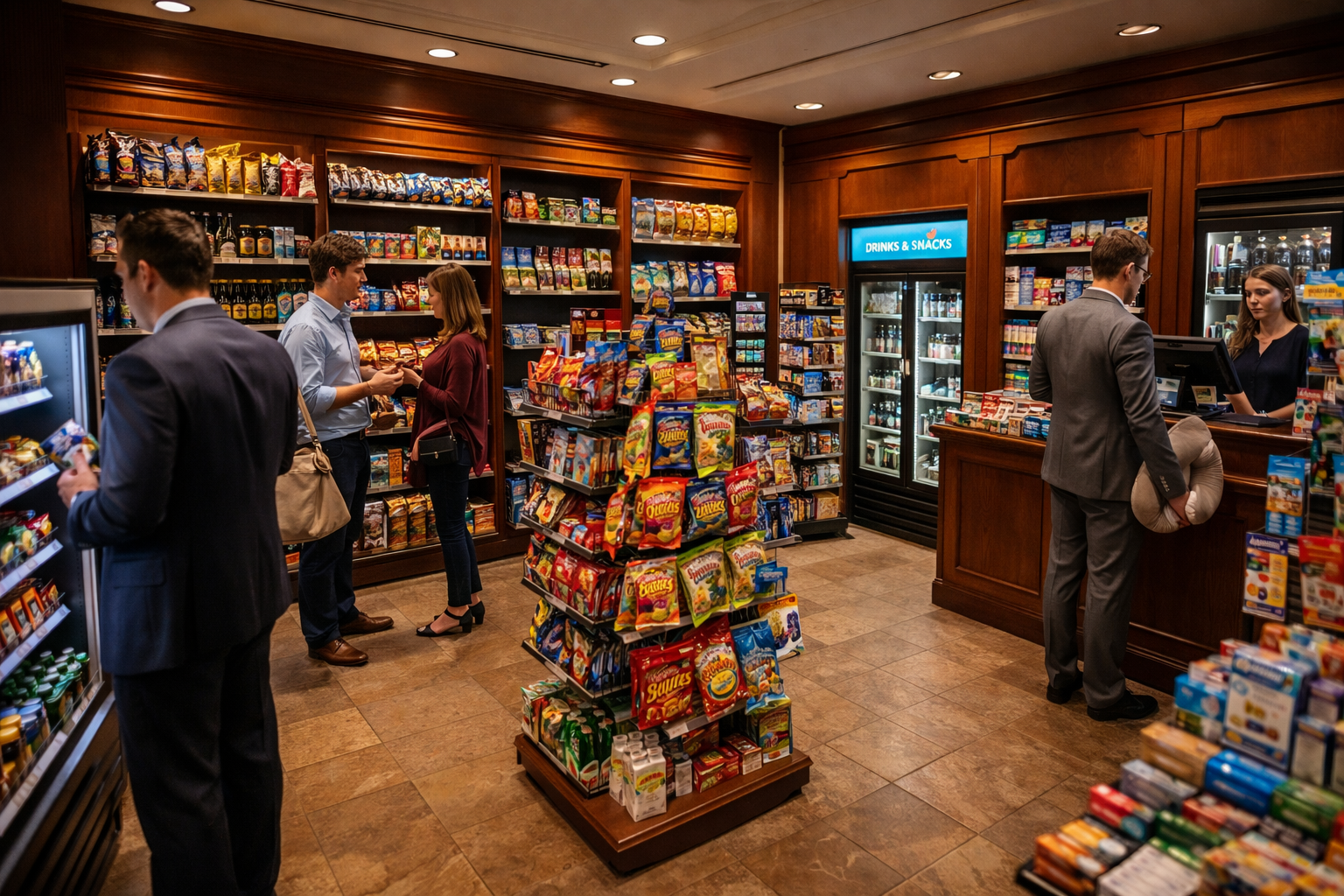 Hotels face unique food service challenges that impact guest satisfaction, operational costs, and competitive positioning.
Guest schedules don’t align with restaurant hours. Even hotels with on-site restaurants typically operate limited hours. Guests arriving late, departing early, or returning after evening activities often find themselves with no food options.
Room service is expensive and often eliminated. High labor costs and low utilization have led many hotels to reduce or eliminate room service, removing a once-differentiating amenity without replacing it.
Limited-service hotels lack food options beyond breakfast. Properties offering complimentary breakfast but no other dining leave guests without convenient meal access for the rest of the day.
Traditional vending machines feel outdated. Chips and candy don’t meet modern expectations for meal-quality food and clash with hospitality-focused guest experiences.
Kitchens sit idle outside breakfast hours. Many hotels invest heavily in breakfast kitchens that go unused most of the day, limiting ROI on equipment, permits, and staff.
What Makes Smart Food Solutions Different for Hotels?
 Traditional hotel food service requires staffing, oversight, and capital investment. Smart food solutions provide 24/7 access to quality food without those burdens.
Complete solution across fresh, frozen, and shelf-stable food. Modern hotel food solutions combine:
- Fresh Food Fridges with sandwiches, salads, wraps, yogurt parfaits, and beverages
- Freezer units with ice cream, frozen meals, and kid-friendly treats
- Ambient micro-markets with snacks, drinks, and sundries
True 24/7 availability. Guests can access food anytime—no staff, no service windows, no coordination required.
Fast, contactless transactions. RFID technology enables a simple “tap, take, go” experience with no scanning or checkout lines.
Affordable alternative to room service. Meals typically range from $6–$12, dramatically undercutting room service and delivery fees.
Flexible stocking strategies match your operations. Hotels can choose the approach that best fits their model:
- Utilize your existing kitchen. Extend breakfast kitchen hours slightly to prepare grab-and-go items after the morning rush. This maximizes ROI on kitchen assets, improves staff utilization, and keeps food margins in-house.
- Partner with local restaurants or caterers. Feature locally prepared meals without managing food production. Revenue-sharing partnerships create guest value and local authenticity.
- Hybrid approach. Use your kitchen for signature breakfast items and partner or wholesale for lunch, dinner, and snacks—balancing control with variety.
Contemporary design. Smart food solutions feature modern aesthetics that integrate seamlessly into hotel lobbies, breakfast areas, or market spaces.
Local food storytelling. Hotels can showcase regional brands and producers, reinforcing a sense of place while supporting local businesses.
Real-World Benefits by Hotel Type
Limited-Service Hotels
Fresh food fridges and micro-markets extend food access beyond breakfast without adding restaurant complexity, while generating incremental revenue.
Full-Service and Boutique Hotels
Smart food solutions complement restaurants by extending food availability after hours and replacing reduced room service with fast, guest-friendly alternatives.
Extended-Stay Properties
Micro-markets provide variety, value, and grocery-style convenience for long-term guests, supporting in-room kitchens and daily meal needs.
Airport and Transit Hotels
Irregular arrival and departure times make 24/7 food access essential. Grab-and-go markets meet the needs of time-crunched, international travelers.
Key Features of Smart Food Solutions for Hotels
- Hospitality-grade design and durability
- RFID-enabled, contactless payments
- Real-time inventory tracking and reporting
- Energy-efficient refrigeration
- ADA-compliant configurations
- Plug-and-play installation
Implementation: How It Works
- Assess guest needs and placement.
- Select stocking strategy.
- Choose equipment configuration.
- Delivery and setup.
- Launch and guest communication.
- Ongoing optimization using sales data.
ROI: The Business Case
- Higher guest satisfaction and review scores
- Incremental food and sundry revenue
- Improved kitchen asset utilization
- Reduced labor and food service costs
- Competitive differentiation in booking platforms
Frequently Asked Questions
What’s the difference between a Fresh Food Fridge and a micro-market?
A Fresh Food Fridge focuses on refrigerated meals, while a micro-market includes fresh, frozen, ambient food, and sundries.
How often are units restocked?
Typically 2–4 times per week, with higher-volume hotels receiving daily fresh food deliveries.
Can hotels customize food offerings?
Yes. Menus can be tailored for dietary needs, regional preferences, and brand positioning.
Elevating Guest Experience Through Food Access
Smart food solutions remove friction from the guest journey while generating revenue and operational efficiency. For hotels looking to improve satisfaction, reviews, and competitiveness, 24/7 food access isn’t a luxury—it’s good hospitality.
Contact REDYREF to explore smart food solutions designed for modern hotel operations.
About REDYREF Smart Food Solutions
REDYREF’s Fresh Food Fridge, freezer units, and micro-market systems deliver contemporary design, RFID payments, and real-time inventory management for hospitality environments.