Manufacturing facilities run around the clock, and the people who keep production lines moving need reliable access to quality food. Whether it's second-shift machine operators, warehouse workers managing inventory, or production supervisors overseeing assembly operations, everyone needs convenient access to filling, nutritious meals during limited break times.
Traditional break room vending machines stocked with chips and candy don't provide the substantial food that workers performing physical labor need. When employees have only 30 minutes for lunch and a facility is located miles from the nearest restaurant, workers either skip meals, bring food from home daily, or waste valuable break time driving off-site.
Smart fresh food vending solutions like the Fresh Food Fridge address this challenge by bringing fresh, complete meals directly into the facility. Meals are available 24/7 for all shifts, require no staff to operate, and give workers fast access to real food without leaving the premises.
The Challenge: Feeding Shift Workers in Industrial Environments
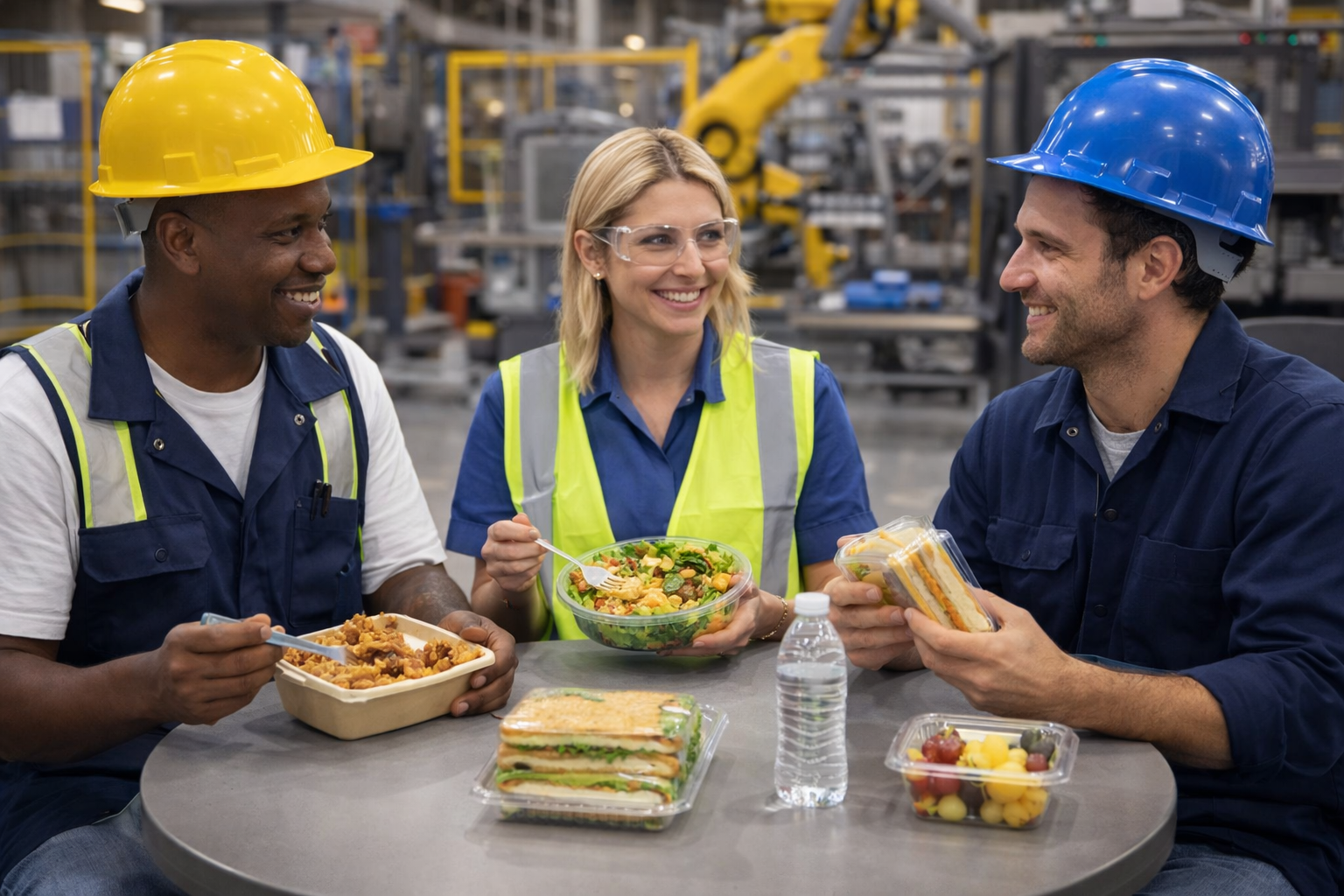 Manufacturing and industrial facilities face unique food access challenges that directly affect worker safety, satisfaction, and productivity.
Limited break times restrict off-site food access. Most workers have 30-minute lunch breaks and short rest periods. Leaving the facility to find food is rarely realistic, leading many employees to skip meals or rely on insufficient snacks.
Shift schedules don’t match cafeteria hours. On-site cafeterias typically serve only first shift. Second and third shift employees often have no access to prepared food, creating inequity across the workforce.
Remote facility locations worsen the issue. Many plants and warehouses are located far from commercial food options. Even with time to leave, there may be nowhere nearby to go.
Physical labor demands real nutrition. Manufacturing work is physically demanding. Inadequate meals contribute to fatigue, reduced focus, and increased safety risks.
These conditions create broader operational challenges:
Safety risks. Fatigued workers experience slower reaction times and reduced alertness, increasing accident risk in environments with heavy machinery.
Lost productivity. Employees who leave the facility for food often exceed scheduled break times, compounding lost production hours.
Retention and recruitment pressure. Access to quality food—especially for second and third shifts—signals that all workers are valued, helping reduce turnover.
Employee morale. Consistent access to affordable, fresh meals improves daily work experience and job satisfaction.
What Makes Smart Fresh Food Vending Different?
Traditional vending machines offer shelf-stable snacks. Smart fresh food fridges provide refrigerated, complete meals designed to support physically demanding work.
Complete meals built for shift workers. Offerings include sandwiches, wraps, salads, protein boxes, pasta dishes, burritos, and heat-ready meals prepared by local or regional food partners, like caterers.
True 24/7 access. All shifts have equal access to fresh food, including nights, weekends, and holidays.
Fast, contactless purchasing. Workers pay in seconds using cards, mobile wallets, or employee badges—ideal for short break windows.
Menus that adapt to demand. Inventory data shows which items sell best, allowing food partners to tailor offerings to worker preferences.
Local food partnerships. Menus can be customized for portion size, dietary needs, cultural preferences, and shift timing.
Real-World Benefits for Industrial Facilities
Large Manufacturing Plants
Strategically placing fridges across large campuses ensures all teams have food access without long walks or travel.
- Production floor break rooms
- Warehouse and loading dock areas
- Maintenance and facilities departments
- Administrative office areas
Workers spend break time eating and resting—not traveling—leading to better recovery and faster return to work.
Warehouses and Distribution Centers
24/7 operations benefit from on-site fresh meals that reduce time away from pick zones and loading areas.
Remote Industrial Facilities
For plants located far from commercial zones, on-site food access becomes essential rather than optional.
Multi-Shift Operations
Fresh food vending creates equity across shifts, supporting morale and retention for night and weekend workers.
Key Features of the Fresh Food Fridge
 The Fresh Food Fridge by REDYREF is built for high-traffic industrial environments.
Durable, industrial-grade construction. Designed for heavy use with secure locking and tamper-resistant features.
Reliable refrigeration. Maintains consistent temperatures with energy-efficient operation.
Flexible payment options. Accepts cards, mobile wallets, and employee badge systems.
Real-time inventory tracking. Reduces waste and ensures popular items stay in stock.
Simple plug-and-play setup. Ships ready to operate with minimal installation effort.
ADA-compliant configurations. Accessible for all workers.
Implementation: How It Works
Step 1: Identify high-traffic break locations.
Step 2: Partner with a food service provider or corporate kitchen.
Step 3: Deliver and plug in the unit.
Step 4: Launch with minimal ongoing facility involvement.
ROI: The Business Case
Reduced break overages. Workers stay on-site and return faster.
Improved safety. Proper nutrition supports alertness.
Better retention. Especially impactful for second and third shifts.
Lower cost than cafeterias. No staffing or kitchen infrastructure required.
Supporting Your Workforce
Providing reliable access to fresh, substantial meals is a practical investment in safety, productivity, and employee satisfaction.
Smart fresh food vending ensures all workers—across all shifts—have equitable access to quality food without leaving the facility.
Contact REDYREF to explore food vending solutions that support your workforce.
Frequently Asked Questions
How often is the Fresh Food Fridge restocked?
Restocking frequency depends on facility size and demand, but most industrial locations receive deliveries 2–4 times per week. High-volume facilities may receive daily deliveries. The inventory management system alerts food partners when stock runs low, ensuring popular items stay available.
What types of meals work best for manufacturing environments?
Most programs include sandwiches, wraps, salads, protein boxes, pasta dishes, burritos, and heat-ready meals that workers can microwave. Portions tend to be larger and more calorie-dense than office-focused menus because physical labor requires more fuel. Breakfast items like breakfast sandwiches, parfaits, and protein bars are popular for early shifts.
Can we accommodate dietary restrictions and preferences?
Yes. Work with your food service partner to include vegetarian, vegan, gluten-free, dairy-free, halal, or other specialty options. The smart inventory system tracks which items sell well, allowing the menu to adapt based on actual worker preferences rather than assumptions.
What happens to unsold food?
Food service partners operate on rotation systems, pulling items before they reach expiration dates to minimize waste. Many partners donate near-expiration items to local food banks where allowed by health regulations. The goal is to stock appropriate quantities that match demand patterns, reducing waste while maintaining availability.
Where should we place fridges in our facility?
Common placements include production floor break rooms, warehouse break areas, near loading docks, in maintenance departments, near timeclocks, and in administrative offices. The goal is placing fridges where workers naturally gather during breaks, minimizing time spent walking to access food. Consider worker traffic patterns and ensure adequate floor space and access to electrical outlets.
How much space does a Fresh Food Fridge require?
The fridge has a compact footprint designed to fit comfortably in break rooms and common areas without consuming excessive space. REDYREF can provide exact dimensions and help determine placement that works within your facility’s available space.
Is the Fresh Food Fridge ADA-compliant?
Yes, the fridge can be configured to meet ADA accessibility requirements, ensuring all workers can access food comfortably regardless of mobility considerations.
How secure are the payment systems?
Fresh Food Fridges use PCI-compliant payment processing with encrypted transactions. Payment data is never stored on the machine itself, ensuring security for users. The physical fridge is built with secure locking mechanisms to protect inventory.
Can we track what workers are buying?
Yes. The management platform provides detailed reporting on sales patterns, popular items, peak purchasing times, and inventory turnover. This data helps optimize menu planning and ensures the right items are stocked at the right times. Reporting is aggregated and anonymous—individual purchase data is not tracked.
How quickly can we get a fridge up and running?
Once you’ve ordered and identified a food service partner, REDYREF ships the Fresh Food Fridge to your location. The plug-and-play design means you can have it operational within days of delivery—just position it, plug it in, and begin stocking. Remote technical support is available from REDYREF if you need assistance during setup.